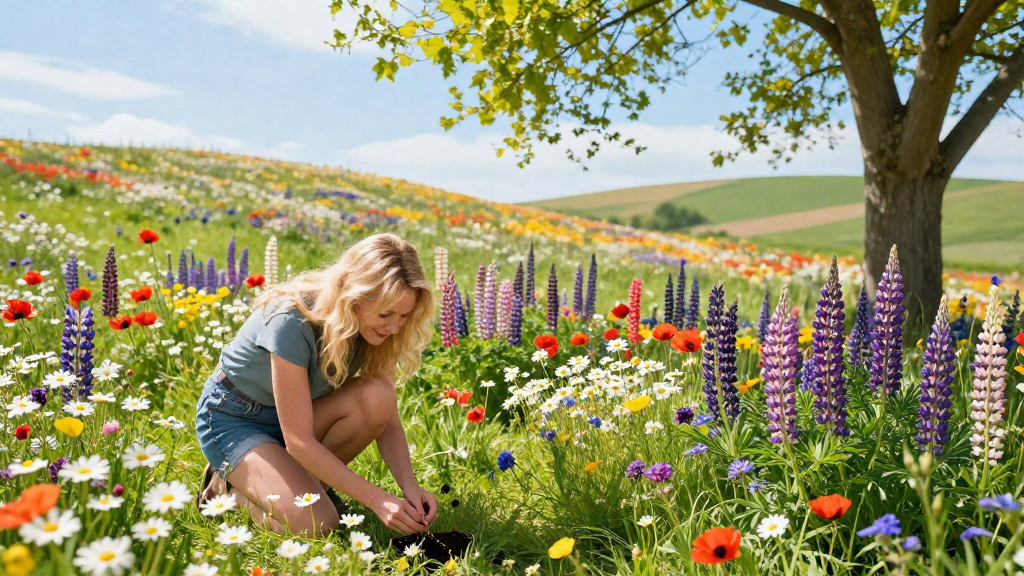
Creating a wildflower garden is a rewarding experience that brings beauty, biodiversity, and a sense of peace to any outdoor space.
In this article, we’ll explore how to make a wildflower garden that flourishes throughout the seasons.
What Do You Need to Get Started on Your Wildflower Garden?
Before diving into the details of how to make a wildflower garden, it’s essential to gather the necessary materials and plan according to your environment. Here’s a list of items you may need:
- Wildflower seeds: Choose a mix local to your area. Native wildflowers will thrive best in your conditions.
- Soil preparation tools: Shovel, rake, and garden hoe.
- Fertilizers: Natural options like compost or organic fertilizers can help enrich soil.
- Weed control tools: Hand tools for weeding, and mulch to prevent weeds.
- Watering equipment: A hose or watering can to ensure your new plants receive adequate hydration.
- Garden boundaries: Edging materials like stones, wood, or a simple string to define the area.
Where Should You Plant Your Wildflower Garden?
Choosing the right location is crucial when learning how to make a wildflower garden. Here are ideal factors to consider:
- Sunlight: Wildflowers generally thrive in full sun. Aim for an area that receives at least 6 to 8 hours of sunlight a day.
- Soil Type: Most wildflowers appreciate well-drained soil. If your soil retains too much moisture, consider planting in raised beds.
- Drainage: Select a spot that doesn’t retain water after heavy rain, as this can lead to root rot and affect growth.
When Is the Best Time to Plant Wildflowers?
Timing can significantly impact the success of your wildflower garden.
Spring or fall are generally the best seasons to sow wildflower seeds.
- Spring Planting: After the last frost, prepare your garden bed and plant seeds.
- Fall Planting: This allows seeds to experience natural stratification, leading to robust blooms in spring.
How to Prepare the Soil for Your Wildflower Garden?
Soil preparation is a crucial step in how to make a wildflower garden that thrives. Here’s how to do it:
- Clear the Area: Remove grass, weeds, and debris from your selected spot.
- Loosen the Soil: Use a shovel or hoe to till the soil to at least 12 inches deep. This promotes aeration.
- Add Nutrients: Mix in compost or organic fertilizers to enrich the soil, enhancing nutrient availability for your wildflowers.
How to Sow Wildflower Seeds Effectively?
Once your soil is ready, it’s time to sow your wildflower seeds. Here’s a step-by-step guide on how to make a wildflower garden from seed:
- Create Planting Rows or Scatter Seeds: Depending on your preference, you may either create rows or simply scatter seeds across the garden bed.
- Follow Seed Packet Instructions: Different wildflowers have unique spacing and depth requirements. Refer to the advice on the seed packet.
- Lightly Rake the Soil: After sowing, gently rake the soil to cover the seeds lightly, ensuring they make contact with the soil.
- Water Gently: Use a soft spray to avoid disturbing the seeds while ensuring they receive enough moisture.
How Do You Maintain Your Wildflower Garden?
Establishing your wildflower garden is only the beginning; maintaining it is crucial for continuous blooms. Here’s how to care for your garden effectively:
- Watering: Water your garden regularly, especially in the early days. Early morning is the best time to water.
- Weed Control: Keep an eye on weeds. Hand-pull or lightly mulch to suppress their growth without affecting your wildflowers.
- Fertilization: Once the flowers bloom, you may use a mild organic fertilizer to encourage further growth, but avoid over-fertilizing as wildflowers thrive in low-nutrient conditions.
- Deadheading: Trim spent flowers to promote more budding and blooming through the season.
What Are the Benefits of a Wildflower Garden?
A well-maintained wildflower garden offers several benefits:
- Biodiversity: Wildflowers attract pollinators like bees, butterflies, and birds, which are essential for ecosystem health.
- Low Maintenance: Once established, wildflower gardens typically require less water and care compared to traditional gardens.
- Beauty: A thriving wildflower garden adds color and charm that changes throughout the seasons.
- Environmental Health: They contribute to soil health, improve air quality, and help combat erosion.
How Can You Attract Pollinators to Your Wildflower Garden?
Attracting pollinators can further enhance your garden’s beauty and productivity. Here are several how to make a wildflower garden that entices wildlife:
- Plant a Variety of Flowers: Include a mix of flowering plants to ensure choices are available throughout the growing season.
- Create Shelters: Add structures like birdhouses or small brush piles to provide shelter for wildlife.
- Avoid Pesticides: Use organic gardening methods to keep the ecosystem safe for bees and other beneficial insects.
Summary: Enjoying Your Wildflower Garden
Learning how to make a wildflower garden is simple and immensely fulfilling. Follow these guidelines, and in no time, you’ll enjoy a vibrant, flourishing garden that not only beautifies your outdoor space but also contributes positively to the environment.
Remember, patience is key. Wildflowers often take time to establish, but with proper care and attention, your garden will become a blooming haven for years to come!
Get out there, and let yourself be inspired by nature as you embark on the journey of cultivating your very own wildflower garden today!