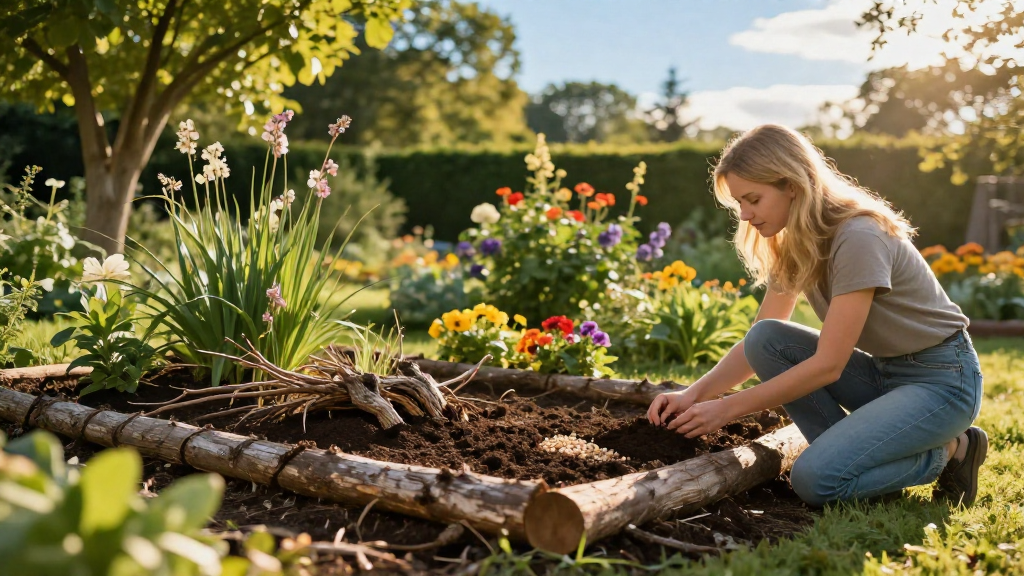
If you’re wondering how to start a hugelkultur bed, you’re in for a treat! This innovative gardening method not only improves soil quality but also contributes to sustainable landscaping practices.
What is Hugelkultur?
Before diving into how to start a hugelkultur bed, it’s important to understand its origins and benefits.
Hugelkultur is a German term meaning “hill culture.”
This gardening technique involves creating raised garden beds filled with decomposing wood and other organic materials.
The process mimics natural forest floors, where rotting wood nourishes surrounding plants over time.
The benefits include:
- Improved soil structure
- Enhanced moisture retention
- Increased nutrient availability
- Reduced need for watering
Now, let’s explore how to start a hugelkultur bed in your garden step by step.
What Materials Do You Need?
Starting a hugelkultur bed requires specific materials for optimal results. Gather the following items:
- Logs: Use large, decomposed logs as the base. Hardwoods like oak and maple are excellent choices.
- Branches: Smaller branches can fill the gaps between the logs.
- Kitchen scraps: These organic materials will introduce nutrients and help with decomposition.
- Leaves and grass clippings: These will provide additional carbon and help retain moisture.
- Topsoil: You’ll want this layer for planting your vegetables or flowers.
- Optional: Manure or compost can be added for a nutrient boost.
How Do You Create the Base?
Creating the base is a crucial step in how to start a hugelkultur bed successfully. Follow these steps to form a solid foundation:
-
Select a Site:
Choose a sunny location in your garden where you want to create your hugelkultur bed. -
Prepare the Area:
Clear away any grass or weeds in your selected spot to prevent competition for nutrients. -
Lay Down Your Logs:
Place large logs horizontally on the ground in a rough rectangle or mound shape. The size should typically be 3 to 4 feet wide and 2 to 4 feet tall. -
Add Branches:
Fill the gaps between the logs with smaller branches and twigs.
How Do You Build Up the Soil Layers?
After laying down the base, you can begin to build the layers of your hugelkultur bed:
-
Layer with Organic Matter:
Add kitchen scraps, leaves, and grass clippings on top of the logs and branches. This layer will heighten the nutritional value. -
Moisture Addition:
Water the layers thoroughly. This will help start the decomposition process and promote microbial activity. -
Top with Soil:
Finally, cover the entire mound with a layer of topsoil, about 4 to 6 inches thick. If using manure or compost, mix it into this layer for added fertility.
How Long Will It Take to Decompose?
Understanding the timeline is crucial when learning how to start a hugelkultur bed.
The materials in a hugelkultur bed will take time to decompose.
Generally, the larger the logs, the longer they will take to break down completely.
-
Initial Phase:
Expect the first year to be a period of settling as the materials decompose and the bed may shrink in height. -
Mid-Term:
In 2-3 years, you will notice substantial breakdown of materials, and the nutrient profile of the bed will improve. -
Long-Term:
After about 5-10 years, the hugelkultur bed will reach peak performance, flourishing with rich microbial life and superior growing conditions.
What Should You Plant?
Once your hugelkultur bed is established, you can begin to plant. Here are some suggestions based on seasons:
-
In Spring:
You could plant fast-growing crops like radishes, lettuce, and peas. These require less space, allowing them to thrive on a newly constructed bed. -
In Summer:
Consider planting tomatoes, peppers, and squash. These are larger plants that will benefit from the moisture retained by the decomposing wood below. -
In Fall:
Cool-weather crops like kale or broccoli would be excellent choices, making the most of the nutrients during this productive season.
How Do You Maintain a Hugelkultur Bed?
Maintaining your hugelkultur bed ensures its long-term vitality. Follow these maintenance tips:
-
Mulch:
Add a layer of mulch annually to retain moisture and prevent weeds from overtaking your bed. -
Watering:
Water your bed adequately, especially during dry spells. The moisture retention properties of hugelkultur help in prolonging the need for watering. -
Monitor Growth:
Regularly check for signs of nutrient deficiencies or pest infestations to combat any issues early. -
Adding Organic Matter:
You can continue to add kitchen scraps, grass clippings, or additional leaves to keep enriching the bed over time.
What Are the Benefits of Hugelkultur?
Before wrapping up, it’s important to remember the numerous benefits of incorporating a hugelkultur bed into your garden:
-
Sustainability:
Hugelkultur beds utilize natural waste, promoting eco-friendly gardening practices. -
Soil Fertility:
As the wood decomposes, it creates a rich nutrient source that enhances soil fertility. -
Water Conservation:
These beds require less frequent watering, making them an ideal choice for regions facing drought conditions. -
Erosion Control:
The raised structure aids in preventing soil erosion, especially during heavy rains.
Conclusion
Knowing how to start a hugelkultur bed allows you to create a sustainable and productive garden space.
With the right materials and maintenance, your hugelkultur bed will thrive for years to come.
Not only will it help you grow delicious, nutrient-rich produce, but it will also contribute positively to your local ecosystem.
So, roll up your sleeves and start your journey toward sustainable gardening with a hugelkultur bed today! Happy gardening!