Low well pressure can turn everyday tasks into frustrating waits, especially when multiple fixtures, sprinklers, or appliances run at once. The right booster pump can improve flow and maintain more consistent pressure throughout your property.
These 10 options cover automatic whole-house boosters, shallow-well jet pumps, pressure-tank systems, and irrigation-focused models. Use the guide below to match pump capacity, controls, and installation requirements to your well system.
Best 10 Water Pressure Booster Pumps for Well Systems Picks for 2026
Best Smart Constant-Pressure Pick
Aquastrong Smart 45 Booster Pump

- 22–80 PSI adjustable pressure range
- Quiet variable-speed operation
- Protection against dry running and overheating
Best For: Residential shallow wells and whole-house pressure boosting
Best Traditional Tank System
VIVOSUN 1.6 HP Shallow Well Pump

- 5-gallon tank reduces cycling
- 30–50 PSI automatic switching
- Includes gauge, adapters, and foot valve
Best For: Shallow-well water transfer and outdoor irrigation
Best App-Controlled Whole-House Pick

- 22–92 PSI adjustable pressure range
- Smart Life app monitoring and control
- Up to 26.5 GPM and 197-foot head
Best For: Connected whole-house boosting and shallow-well applications
Best High-Volume Irrigation Pump

- Up to 5200 GPH for irrigation
- Durable cast-iron construction
- 230V motor with thermal overload protection
Best For: Large-volume lawn and garden irrigation
Best Whole-House Pick
1HP Automatic Constant-Pressure Booster

- Adjustable 22–77 PSI output
- Variable-speed constant-pressure control
- Self-primes shallow wells up to 19 feet
Best For: Whole-house systems and shallow wells
Best High-Flow Utility Option
1.6HP Stainless Steel Shallow-Well Pump

- Up to 1,320 GPH flow
- 164-foot maximum lifting height
- Portable, corrosion-resistant outdoor design
Best For: Irrigation, sprinklers, and clean-water transfer
Best Compact Automatic Choice
1HP Self-Priming Dual-Outlet Pump

- Automatic pressure-switch operation
- Self-primes up to 25 feet
- Dual outlets with durable metal components
Best For: Cabins, shallow wells, and auxiliary water systems
Best Tanked Booster
FOTING 1.5HP Shallow Well Pump
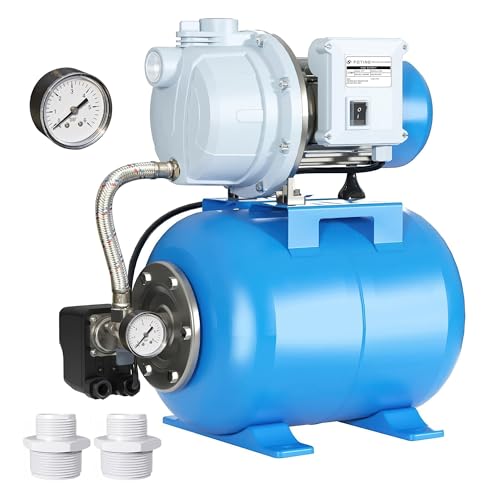
- 1,340 GPH flow and 164-foot maximum lift
- 5-gallon tank with automatic pressure control
- Overheat protection and three-year service
Best For: Home supply, irrigation, lawns, and small farms
Best Stainless Steel Tanked Pump
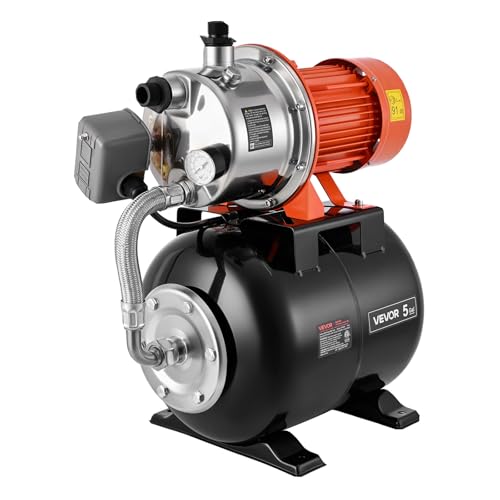
- 1,320 GPH flow and 164-foot maximum head
- 5-gallon tank with 20/40 PSI switch
- 304 stainless steel head and thermal protection
Best For: Fixed home, lawn, garden, and small-farm installations
Best Smart Constant-Pressure Pick – Aquastrong Smart 45 Booster Pump
For homeowners comparing water pressure booster pumps for well systems, the Aquastrong Smart 45 stands out for automatic variable-speed control and a compact, integrated design. It supports shallow wells up to 26 feet, delivers up to 1500 GPH, and lets you set pressure from 22 to 80 PSI.
Best For: Homes, apartments, showers, tanks, city mains, and shallow-well systems needing steady pressure with quiet operation.
Pros:
- Maintains constant pressure automatically as water demand changes.
- Quiet 55 dB operation and claimed energy savings of more than 50% versus standard pumps.
- Includes dry-run, overheating, blockage, leakage, and pressure-sensor protections.
- Stainless steel components and a maintenance-free pressure tank support low-maintenance use.
Cons:
- Its shallow-well suction capability is limited to 26 feet.
- Maximum flow is lower than that of the dedicated 2 HP irrigation pump in this roundup.
The Smart 45 is a strong choice when consistent household pressure, efficiency, and built-in safeguards matter more than maximum irrigation volume. Its 115V power and integrated controls also make it well suited to residential installations.
Best Traditional Tank System – VIVOSUN 1.6 HP Shallow Well Pump
The VIVOSUN 1.6 HP is a practical option among water pressure booster pumps for well systems when you want a conventional pressure-tank setup. Its 5-gallon tank helps reduce cycling, while the pressure switch starts the pump at 30 PSI and stops it at 50 PSI.
Best For: Shallow wells, rain barrels, ponds, garden irrigation, lawn sprinkling, and general outdoor water transfer.
Pros:
- Provides up to 1320 GPH, with a 26-foot suction height and 164-foot lift height.
- Pressure tank reduces pump cycling and may help extend pump life.
- Includes a pressure gauge, overheat protection, overload protection, adapters, tape, and a filter foot valve.
- NSF-61 and ETL certified, with a stainless steel pump head.
Cons:
- The pump head must be filled with water before use.
- Its fixed 30–50 PSI pressure-switch range offers less adjustment than variable-speed models.
- It is intended for shallow sources, with a 26-foot suction limit.
Choose this model if you prefer familiar pressure-tank operation and useful included accessories. It is particularly well matched to outdoor water-transfer and irrigation tasks rather than highly customized whole-house pressure control.
Best App-Controlled Whole-House Pick – AIDPATH EVO BOOST5 Pump
For buyers seeking water pressure booster pumps for well systems with remote monitoring, the AIDPATH EVO BOOST5 combines variable-frequency control with Smart Life app compatibility. It produces up to 26.5 GPM, supports an adjustable 22–92 PSI range, and is designed to maintain pressure across as many as eight faucets on three floors.
Best For: Whole-house pressurization, showers, storage tanks, shallow wells, and users who want app-based pump monitoring and adjustment.
Pros:
- Automatically adjusts output to water demand for steady household pressure.
- Wireless app control provides access to pump status, pressure, energy use, temperature, and settings.
- Offers dry-run, overcurrent, and voltage-fault shutoff protection.
- Quiet 50 dB operation, stainless steel construction, and a stated 3-year full warranty.
Cons:
- Its 1-inch MNPT ports may require compatible plumbing fittings during installation.
- The supplied notes identify a 26-foot shallow-well suction lift, so it is not intended for deep-well use.
The EVO BOOST5 is the most feature-rich choice here for a connected whole-house setup. Its broad pressure range and app controls are useful when household demand varies, while its 115V supply fits many residential installations.
Best High-Volume Irrigation Pump – Aquastrong 2 HP Jet Pump
The Aquastrong 2 HP model is aimed at buyers who need high-volume water movement rather than fine whole-house pressure automation. Among water pressure booster pumps for well systems, it delivers up to 5200 GPH and uses a durable cast-iron housing for lawn sprinklers, garden irrigation, and other demanding water-supply tasks.
Best For: High-volume lawn irrigation, garden watering, construction-site water supply, and emergency water transfer.
Pros:
- High output of up to 5200 GPH, with an 86 GPM listed flow rate.
- Reinforced impeller and diffuser are designed to support efficient, high-volume pumping.
- Durable cast-iron volute suits demanding outdoor applications.
- Built-in thermal overload protection helps protect the motor.
Cons:
- Requires 230V power, which may not suit standard residential outlets.
- Uses large 2-inch suction and 1.5-inch discharge connections.
- It is a centrifugal irrigation pump without the automatic constant-pressure or app features of the smart models.
This pump makes the most sense when irrigation volume and rugged construction are the priorities. Confirm the available 230V electrical service and plumbing sizes before choosing it for a residential well system.
Best Whole-House Pick – 1HP Automatic Constant-Pressure Booster
For homeowners comparing water pressure booster pumps for well systems, this 1HP model stands out as a whole-house option with automatic constant-pressure control. Its variable-speed motor adjusts to demand, while the self-priming design supports shallow wells up to 19 feet.
Best For: Whole-house pressure boosting, shallow wells, storage tanks, and homes with multiple fixtures across several floors.
Pros:
- Adjustable 22–77 PSI pressure range and support for up to eight faucets.
- Variable-frequency control helps maintain steady pressure as water demand changes.
- Quiet operation rated as low as 50 dB, with claimed energy savings over conventional induction motors.
- Self-primes up to 19 feet and includes a compact all-in-one design.
Cons:
- Designed for clean-water applications rather than abrasive or contaminated water.
- A pre-filter is strongly recommended to protect the pump and extend service life.
- Its 19-foot self-priming limit is intended for shallow wells only.
This is the most purpose-built choice of the three for automatic residential pressure management. The constant-pressure features and broad application range make it especially appealing when consistent flow throughout the house matters more than portability.
Best High-Flow Utility Option – 1.6HP Stainless Steel Shallow-Well Pump
This Aquastrong unit is a practical candidate among water pressure booster pumps for well systems when high flow, portability, and outdoor utility are priorities. Its 1.6HP motor is built for irrigation, water transfer, and shallow-well applications, and it can also work as a pressure booster with a regulator.
Best For: Lawn and garden irrigation, sprinkler systems, water transfer, and drawing clean water from shallow wells, tanks, ponds, or rain barrels.
Pros:
- 1.6HP motor provides up to 1,320 GPH flow and a stated maximum lift of 164 feet.
- Stainless steel casing and aluminum motor housing support durability and corrosion resistance.
- Portable carry handle, waterproof switch, thermal overload protection, and automatic dry-run shutoff.
- Includes 1-inch NPT connections and a 3/4-inch garden-hose adapter.
Cons:
- It is not self-priming and must be filled before operation.
- Its portable garden-pump design is less tailored to automatic whole-house pressure control.
- Best suited to clean water transfer and irrigation rather than demanding permanent indoor plumbing setups.
Choose this model when flow and mobility matter more than integrated constant-pressure automation. The protection features and corrosion-resistant housing add practical value for outdoor use, but installation requires careful priming.
Best Compact Automatic Choice – 1HP Self-Priming Dual-Outlet Pump
For buyers seeking water pressure booster pumps for well systems in a compact package, this AIDPATH model combines automatic start-stop operation with self-priming capability. Its stainless steel pump head, brass impeller, and dual outlets make it adaptable for home, cabin, irrigation, and water-tank applications.
Best For: Cabins, homes, RV campsites, rainwater systems, shallow wells, livestock watering, and compact irrigation setups.
Pros:
- Onboard pressure switch automatically starts and stops the pump.
- Self-primes from depths up to 25 feet, exceeding the shallow-well reach of some compact pumps.
- Dual outlets can operate independently or simultaneously.
- Stainless steel pump head, brass impeller, copper motor, and a two-year warranty.
Cons:
- Its stated maximum flow of 792.5 GPH is lower than the other listed pumps.
- Rated flow is 4.4 GPM, so it may be less suitable for high-demand whole-house use.
- Intended for shallow-well and clean-water applications, not deep-well pumping.
This pump is a strong fit when automatic operation and flexible connections are more important than maximum throughput. Its 25-foot self-priming depth and compact footprint suit smaller properties and auxiliary water systems.
Best Tanked Booster – FOTING 1.5HP Shallow Well Pump
For shoppers comparing water pressure booster pumps for well systems, the FOTING combines a 1.5 HP motor with a 5-gallon pressure tank for automatic pressure management. Its 1,340 GPH flow rate, 164-foot maximum lift, and 23-foot suction capability make it suited to household supply and irrigation applications.
Best For: Home water boosting, lawn and garden irrigation, and small farm or cabin water service.
Pros:
- Pressure tank and automatic switch help maintain water pressure while reducing manual operation.
- Delivers up to 1,340 GPH and lifts water up to 164 feet.
- Includes overheat protection, a pressure gauge, two adapters, and three-year after-sale service.
Cons:
- Requires adequate priming during first use.
- Uses 1-inch NPT connections, so adapters or compatible plumbing may be needed.
- Its 17-by-10.5-by-20-inch footprint may require dedicated installation space.
The FOTING is a practical choice when you want a higher-powered booster with an integrated tank and broad irrigation capability. Its automatic controls and included gauge add convenience, though installation should account for priming and plumbing compatibility.
Best Compact On-Demand Option – 1/2 HP Household Booster Pump
This 1/2 HP model is a straightforward option among water pressure booster pumps for well systems when automatic, on-demand operation matters. It provides up to 14 GPM, a 105-foot maximum lift according to the product description, and pressure adjustment through its built-in electric controller.
Best For: Household pressure boosting, garden hose pressure support, lawn sprinklers, and water transfer.
Pros:
- Automatic controller starts with water flow and shuts down during dry pumping.
- Provides up to 14 GPM and up to 3.5 bar maximum pressure.
- Includes a standard 110V plug, 6.5-foot power cable, and 1-inch ports.
Cons:
- The inlet must use a reinforced suction hose; a standard soft garden hose may collapse.
- Its 1/2 HP motor and 105-foot stated lift are less powerful than the tanked alternatives here.
- Coverage is limited to a 180-day warranty.
This pump suits buyers seeking simple plug-in pressure support without a separate pressure tank. The reinforced inlet requirement is important, but the automatic dry-pump protection and adjustable controller make it useful for compatible residential and irrigation setups.
Best Stainless Steel Tanked Pump – VEVOR 1.6HP Shallow Well Pump
The VEVOR pairs a 1.6 HP motor with a 5-gallon tank and a 20/40 PSI pressure switch, making it a strong candidate among water pressure booster pumps for well systems. It is rated for up to 1,320 GPH and a 164-foot maximum head for household supply and irrigation.
Best For: Residential water boosting, automatic garden irrigation, lawn watering, and small farm maintenance.
Pros:
- Automatic 20 PSI start and 40 PSI shutoff help manage pressure and reduce cycling.
- 304 stainless steel pump head resists corrosion and wear.
- Includes thermal overload protection, a pressure gauge, and a filter check valve.
Cons:
- Requires a foot valve and filter screen at the inlet.
- Do not use a hose at the water inlet because suction may flatten it.
- Designed for clean water only and weighs about 31.3 pounds.
With its stainless steel pump head, tank-based pressure control, and included inlet accessories, the VEVOR is well suited to fixed installations. Plan for proper inlet plumbing and clean water to support reliable operation.
How We Picked the Best Water Pressure Booster Pumps for Well Systems
We compared these pumps by looking at pressure rating, flow capacity, motor size, voltage, control style, tank configuration, intended use, and installation flexibility. Whole-house models received priority for domestic water service, while shallow-well and irrigation pumps were evaluated for transfer, lawn, garden, and sprinkler applications.
Because well systems vary widely, published maximum pressure or gallons per hour should not be treated as guaranteed performance at every fixture. Actual results depend on well depth, pipe size, elevation, pressure-switch settings, and the pump’s ability to maintain flow under load.
Quick Comparison
| Best For | What to Prioritize | Models in This Roundup |
|---|---|---|
| Whole-house pressure improvement | Automatic controls, steady pressure, compatible voltage | 80 PSI variable-speed, 85 PSI, and 77 PSI boosters |
| Shallow wells and household supply | Self-priming operation, pressure tank, suction lift | VIVOSUN, FOTING, and VEVOR systems |
| Lawn and garden irrigation | High flow, durable housing, sprinkler compatibility | AQUASTRONG 2 HP and stainless-steel garden pumps |
| Smaller on-demand applications | Lower power draw, simple automatic activation | 1/2 HP on-demand booster |
Key Buying Factors for Water Pressure Booster Pumps for Well Systems
Pressure and Flow
Pressure is measured in PSI, while flow is measured in GPM or gallons per hour. A pump with a high headline PSI may not deliver strong flow at that pressure. For a home, check the required pressure at the farthest fixture and account for pressure losses in long or narrow pipes.
Well Depth and Pump Type
Shallow-well jet pumps are intended for limited suction lifts and are commonly used with wells, cisterns, and irrigation systems. Confirm the manufacturer’s maximum suction depth before purchasing. A booster pump is not a substitute for a properly sized deep-well submersible pump.
Controls, Tank, and Priming
Automatic models can start when a faucet opens, while pressure-tank systems reduce cycling and help maintain steadier service. Self-priming features simplify setup, but the suction line must still be airtight and the pump must be filled or primed according to the instructions.
Electrical and Plumbing Compatibility
Match the pump’s voltage and amperage to the available circuit. Also verify inlet and outlet sizes, check-valve requirements, pipe material, and whether a pressure switch or controller is included. Professional installation is advisable when modifying a pressurized well system or household electrical service.
Who Should Buy Which Water Pressure Booster Pumps for Well Systems?
Choose a variable-speed or automatic whole-house booster when your main goal is more consistent pressure at showers, faucets, and appliances. Select a pressure-tank shallow-well system when you need an integrated solution for a modest home water supply or irrigation setup. For sprinklers, gardens, and high-volume outdoor use, prioritize motor capacity, flow rate, and durable construction over maximum PSI alone.
A compact on-demand pump is best for a smaller fixture, light-duty transfer, or limited irrigation task rather than a large home with simultaneous demand. Before ordering, compare the pump curve—not just the advertised peak rating—with your well depth, desired pressure, and expected flow. Adding a pressure gauge, shutoff valves, filtration where appropriate, and dry-run protection can also improve system reliability.