Portable backup power is no longer just for outages and camping. The right solar setup can keep essentials charged, reduce downtime, and give you a cleaner emergency energy option at home.
Below, we break down 10 strong picks for different needs, from compact starter kits to higher-capacity systems designed for longer outages.
Best 10 Portable Solar Panels for Home Backup Picks for 2026
Compact Home Backup Kit
Jackery Solar Generator 1000 V2

- 1,500W AC output with 3,000W surge
- 1,070Wh capacity and 23.8 lb portable build
- 200W panel with fast emergency charging mode
Best For: Portable backup for essential home loads and short outages
Whole-Home Backup Runner
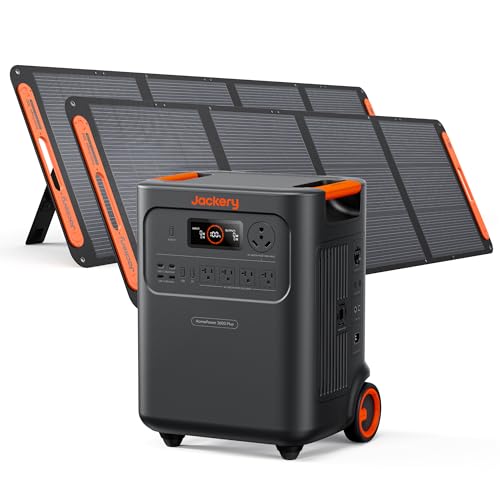
- 3,600W output with 7,200W parallel capability
- 3,584Wh battery expandable to 21kWh per unit
- Includes 2x200W panels and rolling luggage-style design
Best For: Household backup power with high output and simple plug-and-play use
High-Efficiency Portable Panel
Renogy 200W E.Flex Portable Solar Panel

- 25% efficiency from 16BB N-Type cells
- 13.89 lb foldable panel with magnetic closure
- MC4 plus USB-C and dual USB-A outputs
Best For: Pairing with a power station for lightweight backup charging
Heavy-Duty Backup Cart
BLUETTI Elite 400 Solar Generator

- 3,840Wh capacity with 2,600W output
- Includes 2x200W solar panels and trolley design
- 15ms UPS backup for critical devices
Best For: Heavy-duty home backup with fast switchover and high capacity
Home-Backup Power Beast
EBL 2400W Portable Power Station with 200W Solar Panel

- 1843.2Wh LiFePO4 battery with 2400W output
- 200W solar panel included, ships separately
- Charges up to 12 devices at once
Best For: Large home backup needs and heavy-load emergency power
Ultra-Light Solar Starter
Jackery Solar Generator 300 and 40W Solar Panel

- 292Wh compact power station with 300W output
- Weighs just 7.5 lbs for easy carrying
- LiFePO4 battery rated for 4,000+ cycles
Best For: Light emergency charging and highly portable backup power
Midweight Emergency Backup
Solar Generator with Panels Included 1200W Peak

- 576Wh LiFePO4 battery with 600W output
- Pass-through charging while recharging
- Seven total ports for mixed-device use
Best For: Balanced home backup and portable everyday power
Compact Backup Kit
Portable Solar Generator 300W with 60W Panel

- Includes 60W solar panel
- 300W output for small devices
- AC, car, and solar charging
Best For: Small-device backup and easy starter emergency power
Lightweight Emergency Pick
100W Solar Generator with 40W Panels

- 40W panel included
- Only 3.3 lb for easy transport
- 7 outputs with AC, USB-C, and DC
Best For: Light backup power and portable emergency charging
Higher-Capacity Backup Choice
300W Solar Generator with 60W Panel

- 296Wh capacity with 300W output
- 60W panel has 23% conversion efficiency
- Pure sine wave AC plus solar, wall, and car charging
Best For: More capable emergency backup for essential electronics
Compact Home Backup Kit – Jackery Solar Generator 1000 V2
If you want portable solar panels for home backup that still stay easy to move, this Jackery bundle strikes a practical middle ground. The 1,070Wh power station pairs with a 200W panel, giving you a compact solar generator setup that can handle everyday essentials and short outages without taking over your space.
Best For: Apartment or household backup where portability, fast charging, and everyday device support matter most.
Pros:
- 1,500W AC output with 3,000W surge for running multiple appliances.
- 1,070Wh capacity in a 23.8 lb build with a foldable handle.
- Supports fast charging, including a one-hour emergency mode via the Jackery app.
- Includes a LiFePO4 battery rated for 4,000 cycles and over 10 years of use.
Cons:
- 200W solar input is better for backup essentials than whole-home coverage.
- Full solar recharge can take up to 6 hours with the included panel.
Overall, this is a strong choice if you want a portable solar backup system that balances output, durability, and convenience. It is especially appealing when you need something more capable than a small charger but still easy to store and deploy.
Whole-Home Backup Runner – Jackery HomePower 3600 Plus
For shoppers comparing portable solar panels for home backup, this Jackery package is aimed at serious household support rather than light emergency use. With a 3,584Wh battery, 3,600W output, and two 200W solar panels included, it is built to keep larger appliances and home systems powered during outages.
Best For: Homeowners who want high-output backup power with easy rolling mobility and no complex installation.
Pros:
- 3,600W output, with 7,200W available in parallel.
- 3,584Wh capacity expandable up to 21kWh per unit.
- Includes two 200W solar panels and supports solar recharge in about 4 hours.
- Wheels and a telescopic handle make it easier to move around the home.
Cons:
- At 77.2 lbs, it is still a substantial unit despite the rolling design.
- The full package is more backup-focused than travel-friendly.
This is the most robust Jackery option here for home outage coverage, especially if you want plug-and-play backup without permanent installation. The combination of high output, large capacity, and included solar panels makes it well suited to staying prepared for longer disruptions.
High-Efficiency Portable Panel – Renogy 200W E.Flex Portable Solar Panel
If you already have a power station and need portable solar panels for home backup, this Renogy 200W foldable panel is a smart add-on. Its 25% efficiency, lightweight build, and MC4 output make it a flexible choice for charging backup batteries, while the built-in USB ports add convenience for direct device charging.
Best For: Buyers who want a lightweight, high-efficiency portable panel to pair with a power station or battery system.
Pros:
- 25% efficiency with 16BB N-Type cell technology.
- Lightweight at 13.89 lbs and folds to backpack size.
- MC4 output plus USB-C and dual USB-A ports for versatile charging.
- Quadfold design with kickstands, adjustable angles, and IP65 protection.
Cons:
- It is a solar panel only, so it does not include battery storage.
- Best for charging essentials rather than powering home loads directly.
As a portable panel, it stands out for efficiency and easy transport more than raw output. It is a good fit if your home backup plan already includes a compatible power station and you want a panel that is simple to carry, set up, and store.
Heavy-Duty Backup Cart – BLUETTI Elite 400 Solar Generator
This BLUETTI bundle is built for buyers who want portable solar panels for home backup with a larger reserve of power. The 3,840Wh station, 2,600W output, and included 2x200W panels make it a capable choice for keeping key household devices running through outages, while the trolley design helps with mobility.
Best For: Home backup users who need a high-capacity, movable system with fast UPS-style switchover.
Pros:
- 3,840Wh LiFePO4 battery with 2,600W output and 3,900W lifting power.
- Includes two 200W solar panels for recharging off-grid.
- 15ms UPS backup helps keep Wi-Fi, cameras, and pet feeders running.
- Easy-roll trolley system makes the heavy unit easier to move.
Cons:
- At 86 lbs, it is the heaviest product in this group.
- Solar recharge is useful but not especially fast at this size, taking about 9.5-19 hours.
For home backup, this is the most utility-focused BLUETTI option here, combining large capacity with quick switchover and a mobile cart form factor. It makes the most sense if you want serious outage coverage and are comfortable with a heavier, more stationary setup.
Home-Backup Power Beast – EBL 2400W Portable Power Station with 200W Solar Panel
If you want portable solar panels for home backup that can also run heavy-duty gear, this EBL bundle is built for that job. The 1843.2Wh LiFePO4 power station pairs with a 200W solar panel, giving you a large-capacity emergency setup with multiple recharge options and support for high-wattage appliances.
Best For: Whole-home emergency essentials, heavy loads, and users who want a high-capacity solar backup bundle.
Pros:
- 1843.2Wh LiFePO4 battery with 2400W output for demanding backup use
- Charges 12 devices at once with AC, USB-A, USB-C, wireless charging, car port, and DC ports
- 200W solar panel uses monocrystalline cells and is rated up to 23.5% efficiency
- Fast recharge options include AC, dual solar + AC, and solar-only modes
Cons:
- The 200W solar panel alone is listed at 6 to 14 hours for full charging
- At 55 pounds, the power station is not light to move around often
- Solar panel ships separately, which adds a little setup complexity
This is the strongest option here if your priority is meaningful backup capacity rather than ultra-portability. It is especially appealing for home emergency use where you may need to power larger appliances and multiple smaller devices together.
Ultra-Light Solar Starter – Jackery Solar Generator 300 and 40W Solar Panel
For portable solar panels for home backup in a compact, easy-to-carry format, this Jackery bundle keeps things simple. The 292Wh station and 40W panel are best suited to light emergency power, travel, and everyday essentials rather than whole-house support.
Best For: Lightweight backup power for small devices, travel, and simple emergency charging.
Pros:
- Very light at 7.5 lbs, with an integrated handle for easy carrying
- 300W rated output with 2 AC outlets, USB-C, USB-A, and car port
- LiFePO4 battery is rated for over 4,000 charge cycles
- Can reach 80% in about 7.5 hours with the included 40W solar panel
Cons:
- 292Wh capacity is modest for home backup use
- 40W panel is suited to maintaining gear, not fast large-scale charging
- Only 3 total power outlets, so port count is limited
This bundle makes sense if you value portability first and backup power second. It is a practical choice for keeping phones, laptops, and other small essentials running during outages.
Midweight Emergency Backup – Solar Generator with Panels Included 1200W Peak
If you are comparing portable solar panels for home backup and want a balanced option, this 576Wh solar generator sits in the middle. It offers 600W continuous output, a 100W MPPT solar input, and pass-through charging so you can run devices while recharging.
Best For: Balanced emergency backup for home, RV trips, and everyday portable power needs.
Pros:
- 576Wh LiFePO4 battery with 600W continuous and 1200W peak output
- Pass-through charging lets you power devices while the station recharges
- Seven ports total, including 3 AC outlets, USB-C, USB-A, and a car socket
- Compact at 13.67 lbs, with 3,000+ cycles to 80% capacity
Cons:
- Capacity is lower than larger home-backup stations
- 100W solar support is solid, but not as fast as larger panel setups
- Best for essentials rather than sustained high-wattage appliance use
This unit is a smart middle ground if you want something more capable than a tiny travel power bank without jumping to a much larger system. It is well matched to backup basics, light appliances, and portable use around the house.
Compact Backup Kit – Portable Solar Generator 300W with 60W Panel
If you want portable solar panels for home backup that also cover small everyday devices, this ZeroKor kit is a practical starter option. It pairs a 300W power station with a 60W foldable panel and supports recharging from AC, car power, or solar, making it easy to keep key electronics topped up during short outages.
Best For: Charging phones, tablets, laptops, headphones, and other small devices when you want a simple backup kit with the panel included.
Pros:
- Includes a 60W monocrystalline solar panel with 20.5% conversion efficiency.
- 300W power station offers multiple outputs, including AC, DC, USB, and quick-charge USB.
- Built-in BMS adds short-circuit, overload, over-voltage, and overheating protection.
- Works for home, camping, and off-grid charging with AC, car, or solar input.
Cons:
- Not suitable for appliances over 300W.
- Not ideal for heat-prone devices like coffee makers or hair dryers.
- Solar panel junction box is not waterproof.
This is a solid match if you mainly need a compact emergency power setup for low-wattage essentials. The included panel and multiple charging options make it convenient, but the output limit means it is best treated as a small-device backup solution rather than a full home power replacement.
Lightweight Emergency Pick – 100W Solar Generator with 40W Panels
For shoppers comparing portable solar panels for home backup, this 146Wh Apowking kit is a lightweight option for keeping basics running. It includes a 40W monocrystalline panel, a 100W-rated power station, and enough ports to handle phones, tablets, laptops, lights, and other small gear during outages or emergency use.
Best For: Light home backup, emergency charging, and portable use when weight and simplicity matter more than capacity.
Pros:
- Includes a 40W solar panel with 20.5% monocrystalline conversion efficiency.
- Very light at 3.3 lb, so it is easy to carry in a backpack or suitcase.
- Offers 7 outputs, including 2 AC outlets, USB, USB-C quick charge, and DC.
- Built-in BMS and rear cooling vents help support safer operation.
Cons:
- 100W output is limited to small appliances and devices.
- 146Wh capacity is modest for longer home backup needs.
- Panel size and power are best suited to topping up, not heavy loads.
This model makes sense if you want an easy-to-move backup power setup for essentials rather than larger household appliances. Its lower capacity is the trade-off for portability, but the included panel and wide port selection keep it versatile for emergency charging.
Higher-Capacity Backup Choice – 300W Solar Generator with 60W Panel
If you want portable solar panels for home backup with more headroom than a tiny emergency charger, this EnginStar bundle is worth a look. It combines a 296Wh power station with a 60W foldable panel, 300W AC output, and multiple charging paths, giving you a more capable setup for phones, laptops, cameras, CPAP machines, and other small essentials.
Best For: Users who want a compact but more capable backup battery setup for home essentials and overnight outage support.
Pros:
- 296Wh capacity and 300W output provide more room for essential devices.
- Includes a 60W monocrystalline panel with 23% conversion efficiency.
- Two pure sine wave AC outlets help support sensitive electronics.
- Can recharge from solar, wall power, or a 12V car socket.
Cons:
- The listing notes the solar power station is 300W, so it still cannot run larger home appliances.
- Best suited to small electronics and low-power appliances, not high-wattage gear.
- To maintain battery health, it should be recharged periodically when not in use.
Compared with smaller emergency kits, this one gives you a bit more usable runtime and a fuller port selection without getting bulky. It is a sensible middle ground if you want a portable backup system that can cover the basics during outages.
How We Picked These Portable Solar Panels for Home Backup
We focused on real-world backup use: usable battery capacity, AC output, included panel wattage, charging convenience, portability, and overall value. We also considered whether a system is best as a true emergency backup or a lighter-duty option for phones, routers, lights, and small appliances.
Quick Comparison
For short outages and everyday essentials, smaller systems can be easier to move and store. For multi-device backup or longer interruptions, higher-capacity units with 200W panels or multiple panels usually make more sense. In general, more panel wattage helps you recharge faster, but only if your setup has enough battery capacity to store that power.
Key Buying Factors for Portable Solar Panels for Home Backup
Battery Capacity and Output
Check watt-hours for storage and AC wattage for what you can run at once. A higher-capacity power station is better for refrigeration, CPAP use, or several electronics, while smaller units fit basic charging and light loads.
Solar Input and Panel Wattage
Panel wattage affects how quickly you can restore power during the day. Foldable 40W to 60W panels are easier to carry but slower to recharge; 200W panels are more practical for home backup and frequent use.
Portability and Storage
If you expect to move the system indoors, outdoors, or between rooms, weight and footprint matter. Compact models are simpler to store, while larger systems usually trade convenience for much better runtime.
Expandability and Realistic Use
Some buyers need a single portable unit, while others may want a system they can later pair with additional panels or larger storage. Make sure the setup matches your actual outage plan, not just the biggest number on the box.
Who Should Buy Which Portable Solar Panels for Home Backup?
If you want a simple emergency starter kit, choose a smaller portable system with a modest solar panel. If you need dependable home backup for more than just phone charging, move up to a midrange or high-capacity unit with at least one 200W panel. If you are prioritizing longer runtime and faster recharge times, the larger generator kits are the strongest fit for Portable Solar Panels for Home Backup.