In this BougeRV 400W Bifacial Solar Panel review, I examine whether its N-Type cells, 25% efficiency, and two-sided design make it a smart choice for RVs, boats, farms, and off-grid power systems.
The compact 400-watt panel is aimed at buyers who want high output without covering as much roof or ground area.
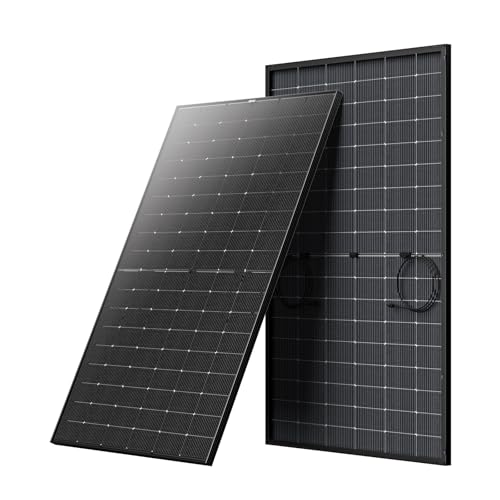
BougeRV 400W Panel Review Summary
You should buy the BougeRV 400W Bifacial Solar Panel if you need substantial output from a single panel and can install it where light can reach both the front and transparent backsheet.
Its N-Type 16BB construction, 25% stated conversion efficiency, corrosion-resistant aluminum frame, and compatibility with on-grid and off-grid inverters make it a strong fit for RV roofs, boats, farms, home backup projects, and other outdoor systems.
It is less compelling if your installation leaves the rear face shaded or if you need a lightweight portable panel.
BougeRV 400W Panel Scorecard
- Rated output: 9/10. The 400-watt maximum power rating is substantial for a single panel and can simplify larger solar arrays.
- Conversion efficiency: 9/10. The stated 25% efficiency is high for this category and helps make better use of limited roof or ground space.
- Low-light performance: 8/10. N-Type cells are designed for extended generation during dawn, dusk, and overcast conditions, although real output still depends on weather and installation.
- Bifacial value: 8/10. The transparent backsheet can capture reflected light from behind, with the manufacturer claiming up to 30% additional output under suitable conditions.
- Durability: 8/10. The aluminum construction is corrosion-resistant, while low stated degradation supports a potentially long service life.
- Installation flexibility: 7/10. It supports 12V and 24V systems and uses a solar connector, but its 46.3-pound weight requires a suitably strong mounting solution.
Key Features and Specifications of BougeRV 400W Panel
The BougeRV 400W Bifacial Solar Panel uses N-Type monocrystalline cells with a 16BB design.
More busbars help collect current across the cells, while the stated 25% conversion efficiency is intended to produce more energy from a relatively compact panel footprint.
| Maximum power | 400 watts |
| Efficiency | 25% |
| Maximum voltage | 33.16 volts |
| Amperage capacity | 12.16 amps |
| Output designation | 12V direct current; compatible with 12V and 24V systems |
| Dimensions | 67.8 by 44.6 by 1.4 inches |
| Weight | 46.3 pounds |
| Cell and frame design | N-Type monocrystalline, 16BB, bifacial, corrosion-resistant aluminum |
| Temperature coefficient | -0.32% per °C |
| Model | ISE240N |
The panel measures 67.8 inches long and 44.6 inches wide, so buyers should measure an RV roof, boat surface, rack, or ground mount before ordering.
At 46.3 pounds, this is a substantial rigid module rather than a panel intended for frequent carrying.
A suitable charge controller, inverter, wiring, fusing, and mounting hardware may also be required; the listing identifies a charger among the included components but does not make the entire system installation-ready.
Bifacial operation is the panel’s main differentiator.
The transparent backsheet allows light reflected from the ground or another bright surface to reach the rear cells.
The claimed 30% gain is therefore a best-case potential rather than a guaranteed everyday increase.
A dark roof, tight mounting surface, or shade behind the panel will reduce that benefit.
Pros and Cons of BougeRV 400W Panel
Pros
- High stated efficiency: The 25% conversion figure helps maximize generation where mounting area is limited.
- Useful 400-watt capacity: One panel can contribute meaningful energy to an RV, boat, farm, or home off-grid array.
- Bifacial construction: Rear-facing cells can collect reflected light when the installation leaves adequate clearance.
- N-Type, 16BB cell design: The design emphasizes current collection, low-light performance, and reduced degradation.
- Outdoor-oriented materials: The corrosion-resistant aluminum frame is appropriate for changing outdoor conditions, including marine use when the rest of the installation is properly protected.
- Broad system compatibility: It is intended for on-grid and off-grid inverters and 12V or 24V applications.
- Long support commitment: BougeRV lists 10-year product technical support and ongoing service assistance.
Cons
- Heavy for some roofs: At 46.3 pounds, the panel and mounting hardware add a meaningful load to an RV or boat.
- Large rigid format: The dimensions limit placement options and make installation more involved than with portable panels.
- Bifacial gains depend on the site: The rear side cannot deliver its full advantage when mounted flush against an opaque or shaded surface.
- Laboratory output is not everyday output: Actual power varies with sunlight intensity, panel angle, temperature, wiring, shading, and controller limitations.
- System components still matter: The panel alone does not provide a complete solar power setup, so buyers must match it with appropriate electrical equipment.
Who Should Buy BougeRV 400W Panel?
The best buyers are RV owners with a roof that can support a large rigid module and a solar controller sized for its voltage and current.
It also suits boat owners, farm operators, and off-grid users who can install it on an elevated rack with reflective space beneath.
Homeowners building a larger array may appreciate the high efficiency and stated low degradation, especially where roof area is constrained.
It is also a practical choice for buyers who value a long service horizon.
BougeRV states first-year degradation of no more than 1% and annual degradation of no more than 0.4%, with a potential service life of 30 years under laboratory data.
Those figures are encouraging, but they should be treated as manufacturer-provided expectations rather than a promise of identical field performance.
Skip it if you need a folding panel for hiking, emergency carrying, or rapid deployment.
Buyers with a small roof, a weak mounting surface, or a completely shaded rear face may also find that the panel’s size and bifacial design do not provide enough practical benefit.
Before purchase, confirm roof loading, connector compatibility, charge-controller limits, inverter requirements, and local electrical rules.
How the BougeRV 400W Panel Performs in Real Installations
Bifacial Placement Matters
The BougeRV 400W Bifacial Solar Panel is most persuasive on a raised rack, light-colored roof, or ground mount where reflected light can reach the transparent backsheet.
A flush installation can still use the front cells, but it gives up much of the design’s main advantage.
Compact Does Not Mean Lightweight
The panel covers less area than the manufacturer’s comparison with conventional designs suggests, yet 46.3 pounds remains significant.
Two-person handling, sturdy rails, and careful roof-load planning are sensible for RV and boat installations.
Heat and Weather Expectations
The stated temperature coefficient is -0.32% per °C, meaning output generally falls as cell temperature rises above standard test conditions.
The aluminum frame and outdoor construction help with durability, but no rigid panel produces its rated maximum continuously in changing weather.
System Matching Is Essential
With a maximum voltage of 33.16 volts and an amperage capacity of 12.16 amps, the panel must be paired with a compatible charge controller or inverter.
A professional installer can also verify series-parallel configuration, wire sizing, grounding, and protection devices.
Alternatives to BougeRV 400W Panel
If you are comparing large rigid solar modules, consider the Renogy 400W solar panel line for broad RV and off-grid availability, or the ECO-WORTHY 400W solar panel line for customers assembling a budget-conscious array.
The Newpowa 400W solar panel range is another relevant option for rigid marine, RV, and off-grid installations.
Buyers specifically interested in bifacial technology can compare the available bifacial 400W solar panels across brands, checking dimensions, operating voltage, frame construction, warranty terms, and connector standards rather than comparing wattage alone.
These alternatives may differ in efficiency, weight, dimensions, and included hardware, so compatibility with your existing system should decide the final choice.
Is BougeRV 400W Panel Worth It?
The BougeRV 400W Bifacial Solar Panel is worth considering for buyers who can take advantage of its high efficiency and rear-facing cells. Its 400-watt rating, 25% stated efficiency, N-Type 16BB construction, outdoor aluminum frame, and support for 12V and 24V systems create a capable foundation for RV, boat, farm, and off-grid solar projects.
The buying decision depends on installation conditions more than headline specifications.
Choose it when you have enough structural capacity, proper electrical equipment, and reflective clearance behind the panel.
If you need portability, minimal weight, or a simple plug-and-play solution, choose a smaller or portable alternative instead.
For a properly planned permanent installation, this BougeRV 400W Bifacial Solar Panel offers a strong blend of output, space efficiency, and long-term potential.