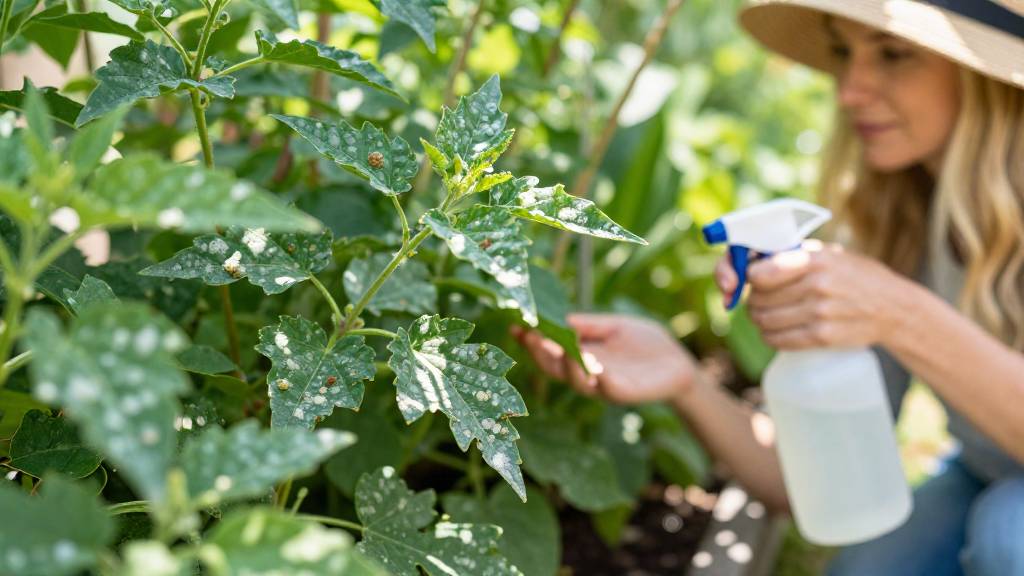
Powdery mildew can be a gardener’s nightmare, but learning how to treat powdery mildew organically can help you reclaim your plants and promote a healthier garden.
What is Powdery Mildew?
Powdery mildew is a fungal disease caused by various species of fungi that thrive in warm, dry conditions.
You’ll often recognize it by its characteristic white, powdery spots on leaves, stems, and buds.
This fungus can affect a wide range of plants, including:
- Vegetables like cucumbers and squash
- Fruits such as grapes and apples
- Flowering plants including roses and zinnias
While it’s widespread, it’s crucial to take action to prevent it from taking over your garden. So, keep reading to learn how to treat powdery mildew effectively!
How Can I Prevent Powdery Mildew?
Prevention is always the best first step when learning how to treat powdery mildew. Here are several strategies to consider:
-
Choose Resistant Varieties:
Select plant varieties that are known to resist powdery mildew. Many seed catalogs indicate their resistance levels. -
Improve Air Circulation:
Space your plants appropriately to ensure good airflow. Avoid overcrowding, as this creates a humid environment that promotes fungal growth. -
Water Wisely:
Water your plants in the morning to allow any moisture on the leaves to evaporate throughout the day. This reduces the chances of fungal growth. -
Mulch Your Garden:
Using organic mulch can help suppress the growth of weeds and create an environment that deters fungal spores. -
Use Pruning Techniques:
Regularly prune your plants to remove dead or heavily infested foliage. This allows for more light and air to reach the inner parts of the plant.
By implementing these preventive measures, you can significantly reduce the risk of powdery mildew in your garden. However, if you do notice signs of powdery mildew, here are some organic treatment options to consider.
How Can I Treat Powdery Mildew Naturally?
If you’ve spotted powdery mildew on your plants, don’t panic! Here’s a list of effective organic treatments that may help.
1. Baking Soda Spray
One of the most popular organic remedies for powdery mildew is a simple solution made from baking soda.
Ingredients:
– 1 tablespoon of baking soda
– 1 teaspoon of liquid soap (non-detergent)
– 1 gallon of water
Instructions:
Mix these ingredients in a spray bottle and apply them directly to the affected leaves and stems.
Repeat every 7 to 14 days as needed.
2. Milk Spray
Surprisingly, milk can be an effective fungal agent when used correctly.
Recipe:
– 1 part milk (either whole or skim)
– 2-3 parts water
Application:
Spray this mixture onto the plants at least once a week. The proteins in milk help combat the fungi and can promote overall plant health.
3. Neem Oil
Neem oil is a natural pesticide that can help you learn how to treat powdery mildew while also protecting your plants from other pests.
Instructions:
Dilute neem oil in water according to the label instructions and spray it on the affected areas.
4. Essential Oils
Certain essential oils such as tea tree oil and lavender oil possess antifungal properties.
How to Use:
– Mix 10-15 drops of essential oil with a tablespoon of soap in a spray bottle filled with water.
– Mist the affected parts of the plant and repeat this every 5-7 days.
5. Garlic Spray
The strong aroma of garlic can ward off various fungi, including powdery mildew.
Recipe:
– Blend a few cloves of garlic with water
– Strain out the pulp, and dilute the remaining liquid with more water before spraying it on affected plants.
6. Cornstarch
Another effective option is to use cornstarch as a dust on your plants. This method works by smothering the spores of the mildew.
Application Method:
– Dust, using a sifter, onto the affected leaves.
7. Organic Fungicides
Organic fungicides made from:
– Sulfur
– Copper
– Bacillus subtilis
Can also be used for treating powdery mildew. Follow the manufacturer’s instructions for application guidelines.
When Should I Treat Powdery Mildew?
Timing is crucial when it comes to effectively learning how to treat powdery mildew. It’s best to act quickly once you notice the first signs of infection, but even if it has spread, treatment can still be beneficial.
Early Intervention:
Check your plants regularly, especially during warmer months when fungal spores are most active.
Symptoms to Look For:
- White, powdery spots on leaves
- Yellowing or browning leaves
- Stunted growth
If you notice these, take action immediately with one or more of the treatments mentioned above.
How Can I Reduce Future Powdery Mildew Outbreaks?
Post-Treatment Steps:
Once you’ve learned how to treat powdery mildew, follow these steps to minimize future outbreaks:
-
Remove Infected Plant Material:
After treatment, gather and dispose of all infected plant matter to prevent further spread. -
Improve Sanitation:
Clean your gardening tools and pots regularly to prevent any cross-contamination between plants. -
Rotate Crops:
Practicing crop rotation can reduce the buildup of fungal spores in the soil.
By implementing these recovery and prevention techniques, you’ll create a healthier garden ecosystem and limit the chances of fungal diseases returning.
Conclusion
Learning how to treat powdery mildew organically not only protects your plants but also ensures the overall health of your garden.
With a variety of natural treatments and preventive measures at your disposal, you can effectively manage powdery mildew while maintaining an organic gardening practice.
Stay vigilant, keep your gardening practices strong, and your plants will thrive free of this pesky fungal problem!